Advent Alphabet (H)

HOLY

The Almighty works marvels for me.
HOLY is his name.

The Magnificat begins with an invitation to praise, thanksgiving, joy and gladness. Mary sings of the marvels already done in her life, with perhaps only an inkling of what is to come. She has lived a life of quiet holiness, she has been faithful. Mary worshipped the one God; she made pilgrimages to the Temple; she prayed the shema morning and evening and she obeyed Torah in the spirit of the covenant. When Mary sings that God’s ‘name is holy’ she is acknowledging that everything she is and does finds its origins in God.

The Magnificat has been prayed for centuries. It shapes those who pray it.

St Bede the Venerable comments on this passage:

For the Almighty has done great things for me, and holy is his name.
Mary attributes nothing to her own merits. She refers all her greatness to the gift of the one whose essence is power and whose nature is greatness, for he fills with greatness and strength the small and the weak who believe in him.
She did well to add: and holy is his name, to warn those who heard, and indeed all who would receive his words, that they must believe and call upon his name. For they too could share in everlasting holiness and true salvation according to the words of the prophet: and it will come to pass, that everyone who calls on the name of the Lord will be saved.

In Advent we are invited to call upon God’s name. We are invited to seek that quiet holiness that Mary lived.

Pray the Magnificat each day. Ask God to show you the holiness of your own life. Give thanks to God.

(Luke 1:46–55, Dec 22nd)

Advent Alphabet (G)

GLORY

In the Prologue of John’s Gospel we find the themes of Life, Light, Love and Glory poetically woven together. It’s hard to separate one from the other. As the Gospel unfolds John shows us that Christ’s glory is revealed through the ‘signs’ (miracles) he performs. Glory is as much about doing as it is about being.

We can follow the theme of glory through salvation history. It is there in an implicit form in Genesis in God’s creative acts and the refrain that God sees that is ‘good’ and ‘very good’. That we are made in God’s image means that we are created to bear and reflect that glory. In Advent our focus sharpens and we hear through the prophecies of Isaiah how God’s glory is revealed. God promises Judah a glorious return, with every mountain laid low and every valley exalted. The Israelites are caught up in the glory of God’s saving actions.

And the Word became flesh and lived among us, and we saw his GLORY, glory as of the only Son from the Father, full of grace and truth.

This is a touchstone text of our faith. However our path has been shaped, whichever spirituality has drawn and shaped us, we are invited to be open to God’s glory and live lives that reflect it.

Can you name people in your own life who reflect God’s glory?
Thank God for them.

(John 1:1-18, Christmas Day)

Advent Alphabet (E)

EMMANUEL
Isaiah’s words speak directly to the political situation of 736 BC.  In the face of the growing power of Babylon, Judah is tempted to make an alliance with Assyria. Isaiah warns against this and when King Ahaz requests a sign this is what he hears:

‘The Lord himself, therefore,
will give you a sign.
It is this: the maiden is with child
and will soon give birth to a son
whom she will call Emmanuel,
a name which means God-is-with-us.’

Isaiah’s message is very clear: trust in God and don’t be tempted to organise things yourself. From our vantage point the words are very comforting. In the turmoil of our daily lives we need to know that God is with us. The image of a pregnant maiden also tells Ahaz that there is a plan and the difficulties will pass. God’s plan will unfold in months and not years. This is a God who stays close to his people.

Where have you felt the closeness of God this Advent?

(Isaiah 7:10-14, Dec 20th)

Advent Alphabet (F)

FLOCK

He is like a shepherd feeding his FLOCK, gathering lambs in his arms, holding them against his breast and leading to their rest the mother ewes.

Fluffy, clean sheep can be found on many of our Christmas cards. They look cute and comforting. For the people of Israel the image had different connotations; shepherding a flock was a matter of life and death. The shepherd’s livelihood depended on finding good pasture, guarding from predators and protecting the ewes and their lambs. The shepherds took on every danger themselves so that their flock would survive.

In the biblical imagination the shepherd has come to symbolise something of the strength and mercy of God. Judah has experienced a time of trial in Exile. Now they will experience the tenderness of God’s care. All past failing are forgotten and God will think only of the care and protection that is needed for their flourishing.

On a hillside in Bethlehem shepherds watched through the night. The well-being of their flock depended on their watchfulness. That night their watching turned to wonder as God’s glory was revealed.

Are there places in your own life where you are called to shepherd?

(Isaiah 40:1-11, Tuesday, Week Two)

Advent Alphabet (D)

DAVID

‘Joseph, son of DAVID, do not be afraid to take Mary home as your wife…’

As the biblical story of salvation unfolds we see Israel watching and waiting in times of darkness, faith-filled and courageous as the way head becomes clear, and jubilant as God’s promise unfolds. Each part of the journey has depended on Israel saying ‘yes’ and trusting in God’s promise. They have stumbled and almost fallen many times. The choosing of David, from the insignificant town of Bethlehem, marks a turning point in the story. David is the youngest and is called from the fields to be anointed king by Samuel.

To David will be given the promise of a dynasty that will stand firm and a throne that will be secure forever. The covenant, which up until this point was conditional, now becomes unconditional. The history of promise converges now in David. It is from David’s line that a Messiah will be born. Lineage matters a great deal in the story of our salvation.

That promise to David now takes shape through the faith of Joseph, son of David. His faithful living of Torah and his courage in trusting the angel’s word are essential to God’s plan. Right before his eyes God’s dynasty will be secure in the form of a tiny child. God has used every step of Joseph’s journey to bring his promise to completion.

Can you trace the path of God’s promise in your own life?

Where can you see God’s promise in your own faith journey?

(Matthew 1:18-24, Dec 18th)

Advent Alphabet (C)

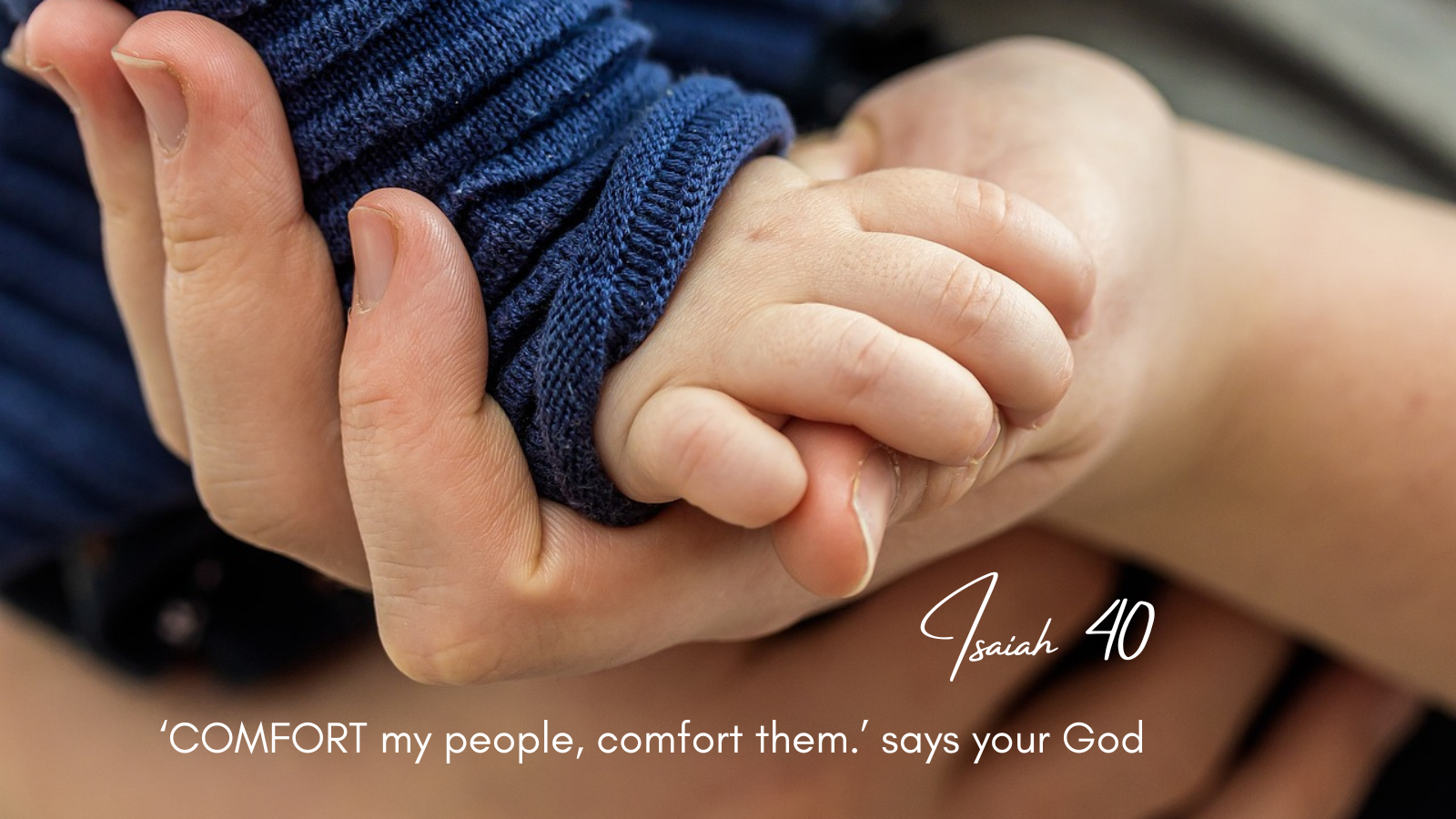
‘COMFORT my people, comfort them.’ says your God

The prophecies of the Books of Isaiah are integral to our prayer and worship in Advent. It’s almost impossible to hear the opening of Isaiah 40 without also hearing the plaintive tones of Handel’s Messiah. This is a God who is invested in our lives. This is a God who sees our distress and wants to bring comfort.

From exile in Babylon Judah has cried out in anguish. They have found no source of comfort:

 Zion stretches out her hands, with no one to comfort her. 
(Lamentations 1:17)

God now speaks and ends the silence and emptiness of Exile. Judah is now to enjoy possibilities beyond her imaginings. The comfort that God offers is much more than solace, it is the promise of a complete reversal of fortunes. All the suffering that Judah has endured in exile will now be turned to joy.

There’s an element in the process of bringing comfort that acknowledges, but doesn’t judge, the source of pain. This is how God is with Judah. This is how God is with us.

Where are you most need God’s comfort this Advent?

(Isiah 40:1-11, Tuesday, Advent, Week 2)

Advent Alphabet (B)

BLESSED

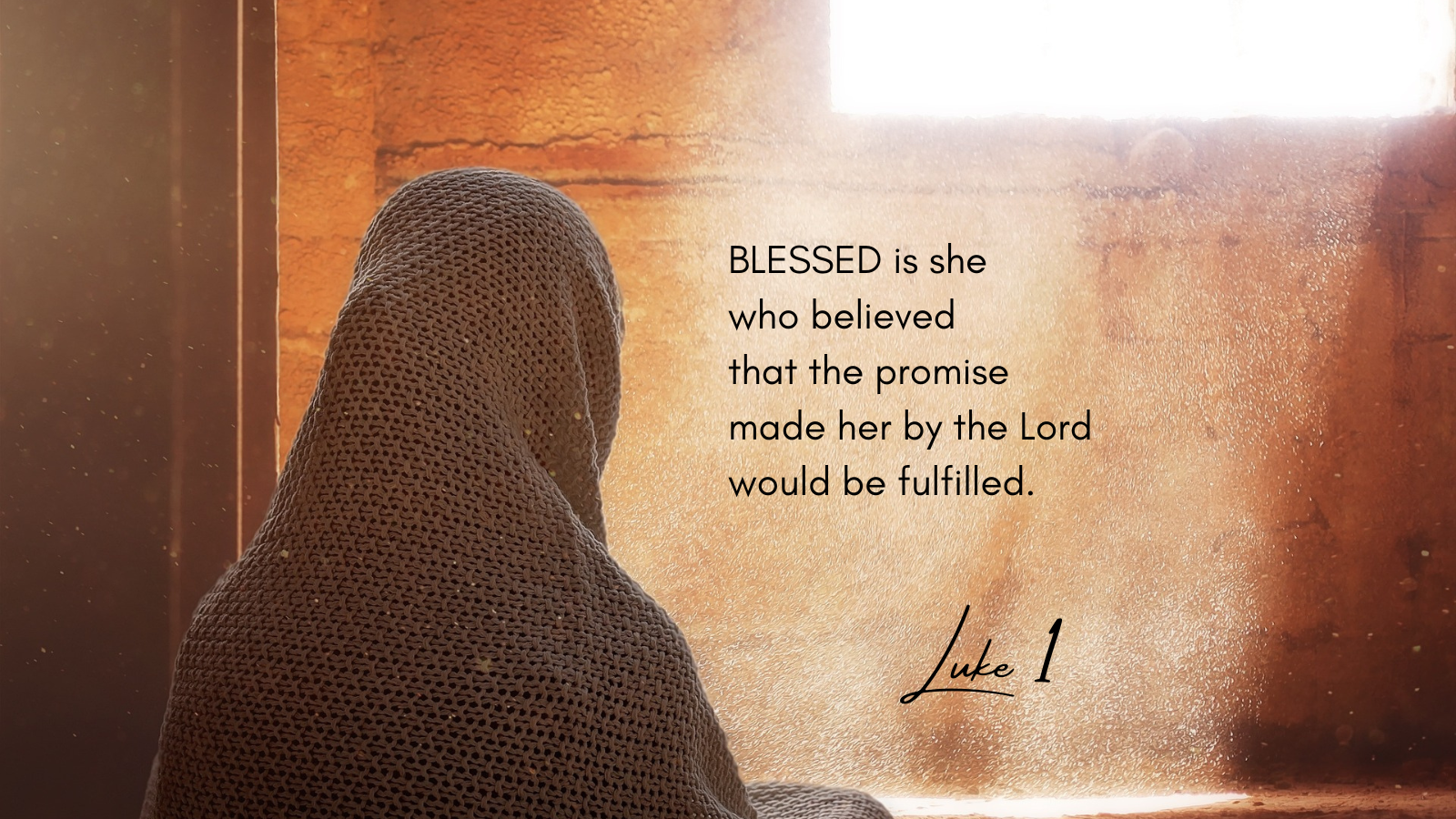
BLESSED is she who believed that the promise made her by the Lord would be fulfilled.

Over the course of Advent we’ll trace the story of our salvation with all its twists and turns. It’s a story of promise and blessing, of anguish and exile. Through eyes of the prophets and biblical characters we will learn what it means for God to bless and to bring that blessing to fulfilment.

From the opening chapters of Genesis, to the closing chapters of the Book of Revelation, we find the language of blessing. There are many ways to understand the Biblical view of blessing. It can be understood as ‘a dynamic concept, always forging ahead, the object of hope and searching’. (Brueggemann)

We see something of this dynamism in the scene which Luke paints for us of Mary going in haste to visit her cousin Elizabeth. Elizabeth recognises in Mary a woman who has been faithful to Torah all of her young life. She is a woman who has already walked in the way of the blessed. God’s promise to Mary opens up the path of blessing for all ages to come.

What blessing do you hope for this Advent?

(Dec 21st Luke 1:39-45)

Advent Alphabet (A)

AWAKE

As Advent begins the message is loud and clear: stay awake. Advent calls us to be awake and attentive to the many ways in which the Word made Flesh is already present in our lives. It calls us too to hope that all that weighs heavy in our personal lives, and the world, will be touched by Christ’s birth.

The hearers of Mark’s Gospel lived in a time of great uncertainty, their days marked by violence and threat. This level of threat probably meant that they were in a permanent state of alert. We know enough now about our physiology to recognise that our bodies suffer when the fight or flight response is triggered too often. So how are we to hear Mark’s words today?

On a simple level I hear in the text an invitation to be open and ready to all the ways in which God will be revealed to me this Advent. I can neither control nor predict those ways, but I know for certain that they will happen. Some of the ways in which God will be revealed will be gentle, others won’t. My Advent always starts well, but it doesn’t take long before many things compete for my attention. My hope is that I will stay awake.

How is God calling you to stay awake this Advent?

(Advent Sunday 1, Mark 13:33-37)

Christ the King

Ezekiel 34:11-12,15-17
Matthew 25:31-46

Today our liturgy opens with Ezekiel’s well-known image of God as a shepherd. God promises to tend his people as a shepherd would his flock. Shepherd imagery is often used when the Biblical writers talk about kingship, indeed, David, the most famous king of all, is called from the sheepfold to be anointed king. Shepherds risked their lives to ensure the well being of their flocks, they scanned for danger and searched for pasture. They needed to know their flocks and to be able to separate any creatures that were not part of their flocks.

When we lay this Old Testament imagery alongside today’s parable of the Sheep and the Goats there are multiple layers of meaning. We are presented with a shepherd who knows his flock and Jesus who knows each one of us individually. Both the shepherd and Jesus lay down their lives for the well-being of those entrusted to them. In the context of the last Sunday of the liturgical year there is another note which sounds and it is that of judgement. While we might think of this as an image of final judgement, we can also see it as our servant king standing before us today, showing us the past year.

Have I recognised Jesus?
Have I had courage to respond?

In this last week of the liturgical year our comforts and protections are stripped away. Our servant King stands before us, inviting us into the mystery of the Incarnation, inviting us to follow him.

Christ the King
Mathew 25: 31-46

Our King is calling from the hungry furrows
Whilst we are cruising through the aisles of plenty,
Our hoardings screen us from the man of sorrows,
Our soundtracks drown his murmur: ‘I am thirsty’.
He stands in line to sign in as a stranger
And seek a welcome from the world he made,
We see him only as a threat, a danger,
He asks for clothes, we strip-search him instead.
And if he should fall sick then we take care
That he does not infect our private health,
We lock him in the prisons of our fear
Lest he unlock the prison of our wealth.
But still on Sunday we shall stand and sing
The praises of our hidden Lord and King.

Malcolm Guite

Our King is calling, can I hear him?

Thirty Third Sunday in Ordinary Time

Matthew 25:14-30

In his book The Parables of the Kingdom, C.H. Dodd refers to today’s parable as the parable of Money in Trust. I found this a helpful starting place. What the parable describes was a very normal way for the wealthy to do business in the ancient world. When property was entrusted there was an understanding that a one hundred percent return was the minimum expected. The wealthy landowner or merchant would trust that decisions would be made that were in keeping with his own business sense and practice. A return was expected.

Commentators suggest that what afflicts the servant who was given one Talent was a lack of imagination. He had already decided what sort of a man his master was. The servant operates out of fear and a slightly prejudiced understanding of his master. He allows fear to guide him rather than trust. The trust his master has put in him is not repaid. Digging money down into the ground was the usual way to protect money from theft. But in digging down the money he also dug down an opportunity for grace.

This parable speaks to me about my own tendency to narrow down possibilities rather than open them up. The parable is an invitation once again to step into the world of grace and possibilities and to leave behind fear and lack of trust.

Are there situations in your own life where God is calling you to imagine a world of grace?