Christ is here, Emmanuel! Majesty so mild: Wisdom dwells with grace and truth, Hidden in this child.
Here is God’s eternal Son, Now to us made known, By the Spirit’s love conceived, Mary’s flesh his own.
Born of God’s creative will, Christ is Light from Light, Come to rescue Adam’s sons, Waiting in the night.
Father, Son and Spirit blest: Heav’n their glory sings, While the earth with mighty voice Praise and Worship brings.
Stanbrook Abbey
This beautiful hymn says everything I want to say about the mystery of Jesus born for us at Bethlehem. May Jesus reveal himself to you today in every moment of grace and truth. Happy Christmas!
On this last day of Advent the Church lays before us a pivotal text in the Old Testament, 2 Sam 7. Walter Brueggemann describes it as ‘the taproot of the Messianic idea in Israel’.
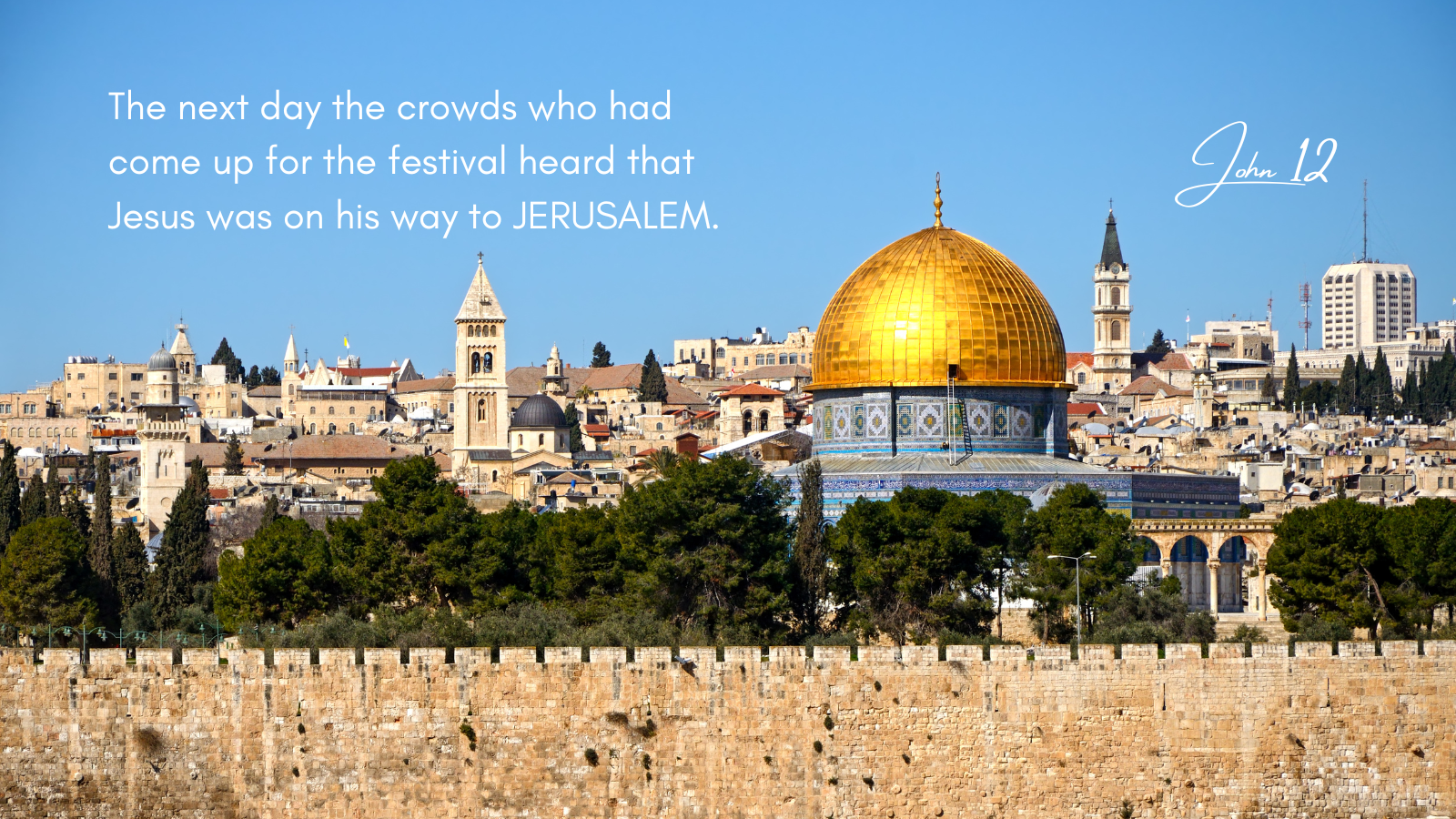
After successfully bringing the Ark of the Covenant to Jerusalem and putting it in a tent, David now wonders if he should build something much grander. There’s a wordplay at work here. The word for ‘house’ can also mean ‘dynasty.’ The prophet Nathan tells David;
‘The Lord will make you great; and the Lord will make you a House.’
The roles are now reversed as David will no longer need to build God a ‘house’ as God intends to build David a ‘dynasty’. God makes a ground-breaking promise that in the lineage of David his faithful love will be made manifest. Up until this point God’s promises have been conditional, but now the dynasty is guaranteed in perpetuity. None of this is David’s doing. David is to be bound in relationship to the Lord: ‘I will be a father to him and he a son to me.’ The tender language of father and son always strikes me. God’s covenant is not a legal contract, but a relationship of love. As the story of salvation unfolds there are many falls from grace along the way. God’s promise remains.
Our final Gospel text in Advent brings us to the threshold of the fulfilment of all of God’s promises. In the Benedictus Zechariah sings of rescue, salvation and the promise proclaimed by the prophets. His son, John, will prepare the way for the Saviour. All of this is possible ‘by the tender mercy of our God’. Through the desert and exile, through the poor and the easily forgotten, our Advent journey has taken us to the very heart of God.
You may feel your Advent journey hasn’t quite ended and you are not really ready for Christmas to begin. Perhaps your plans have been radically changed and you are left disappointed. Into every situation of your life God is waiting to pour his tender mercy.
Where do you most need God’s mercy this Christmas?
O King of all the nations, the only joy of every human heart; O keystone of the mighty arch of man, come and save the creature you fashioned out of dust.
O Rex Gentium
O King of our desire whom we despise, King of the nations never on the throne, Unfound foundation, cast-off cornerstone, Rejected joiner, making many one, You have no form or beauty for our eyes, A King who comes to give away his crown, A King within our rags of flesh and bone. We pierce the flesh that pierces our disguise, For we ourselves are found in you alone. Come to us now and find in us your throne, O King within the child within the clay, O hidden King who shapes us in the play Of all creation. Shape us for the day Your coming Kingdom comes into its own.
‘And the Lord you are seeking will suddenly enter his Temple; and the angel of the covenant who you are longing for, yes, he is coming, says the Lord of hosts.’
In today’s reading from the prophet Malachi there are two words which always stand out for me: ‘seeking’ and ‘longing’. These words are firmly part of our Advent vocabulary. We have met them in our Scripture readings and hymns. Through the centuries Christian writers have explored the theme of longing for God. I have found myself reminiscing about my childhood and the special times of longing for birthdays, holidays, the arrival of my grandparents from Denmark. Nothing as an adult seems quite to equal the build up of excitement that I experienced as a child.
In her book, The Coming of God, Maria Boulding osb, captures beautifully the longing that is in every human heart:
‘… the work of grace is going on in you through the whole business of living, to hollow you out, to make you Capax Dei as the old mystics used to say, able to receive God. You yourself are the place of desire and need. All your love, your stretching out, your hope, your thirst, God is creating in you so that he may fill you. It is not your desire that makes it happen but his. He longs through your heart. Your insufficiency and your forgetting to long for him are no barrier. In your prayer God is seeking you and himself creating the prayer; he is on the inside of the longing.’
The Gospel text from Luke 1:57-66 today tells of the birth of John the Baptist and his naming.
The time came for Elizabeth to have her child, and she gave birth to a son; and when her neighbours and relations heard that the Lord had shown her so great a kindness, they shared her joy.
Here Luke expresses a joy that I can easily relate to. Shared good news brings a blessing that ripples out to all who hear it. This joy is possible because Elizabeth and Zechariah are both people who have walked faithfully in God’s ways and been humble enough to make space for God.
I don’t think I could imagine a more poignant scene if I tried than that of Hannah leaving her child Samuel in the Temple at Shiloh. Everything about the story raises a huge question. Hannah had longed for a child and saw the birth of Samuel as the greatest blessing. And yet, she had made a vow that he would be given over to the Lord.
Perhaps we need to take a step back from the poignant details and see this episode as part of God’s overarching plan. By growing up in Shiloh Samuel is shown to have been trained from a very young age to listen to God’s word and to act upon it. It is Samuel who will anoint David as King, and from David’s line the Messiah will be born.
We can trace a thread through the stories of the Old Testament of people who were faithful to God against all odds. Each small choice and each big ‘Yes’ paves the way for the fulfilment of God’s promise. Maria Boulding, in her book, The Coming of God, expresses this beautifully:
‘The chosen people were created to be a centre of attunement, receptivity and expectation, a place of felt need and desire. They were to listen to God’s word, to long for him, and to be the womb-community which would bring forth the One who was to come.’
In Luke’s Gospel when Mary sings her Magnificat she embodies every longing of Israel. Every choice to be receptive to God’s Word will now take flesh in her.
And still today, God longs for our whole-hearted participation in the promise of salvation. We are still called to be that place of longing for our communities, for our country, for the world.
Read through the passages a few times during the day. How is God speaking to you through these texts?
O Radiant Dawn, splendour of eternal light, sun of justice; come, shine on those who dwell in darkness and the shadow of death.
O Oriens
First light and then first lines along the east To touch and brush a sheen of light on water As though behind the sky itself they traced The shift and shimmer of another river Flowing unbidden from its hidden source; The Day-Spring, the eternal Prima Vera. Blake saw it too. Dante and Beatrice Are bathing in it now, away upstream… So every trace of light begins a grace In me, a beckoning. The smallest gleam Is somehow a beginning and a calling; “Sleeper awake, the darkness was a dream For you will see the Dayspring at your waking, Beyond your long last line the dawn is breaking”.
Matthew begins his gospel with a lengthy genealogy which requires great concentration, whether you are listening to it or reading it aloud. It’s not unlike having a complicated story plot explained or trying to work out how you are related to a distant relative. The lineage which Matthew lays out so carefully is our lineage too. We are as much reliant on God’s promise as our Biblical ancestors.
Matthew tells his story through Joseph’s eyes. Joseph’s Davidic descent is all important here. This descent, so carefully explained, embeds Jesus very firmly in Jewish tradition. Two leaps of faith are required for God’s plan to come to fulfilment: Mary’s ‘yes’ and Joseph’s willingness to be a father to Jesus.
We are almost at the end of our Advent journey. The path of promise that we have traced through the Scriptures doesn’t come to an end with Christ’s birth. The unique story of how each of us came to be born stands alongside the birth of our Saviour. God still waits for our ‘yes’ and our willingness to enter deeper into the mystery of the Incarnation.
Look back over Advent. How have you been drawn deeper into the mystery of the Incarnation?
O Key of David O royal power of Israel controlling at your will the gate of Heaven: Come, break down the prison walls of death for those who dwell in darkness and lead your captive people into freedom.
O Clavis David
Even in the darkness where I sit And huddle in the midst of misery I can remember freedom, but forget That every lock must answer to a key, That each dark clasp, sharp and intricate, Must find a counter-clasp to meet its guard, Particular, exact and intimate, The clutch and catch that meshes with its ward. I cry out for the key I threw away That turned and over turned with certain touch And with the lovely lifting of a latch Opened my darkness to the light of day. O come again, come quickly, set me free Cut to the quick to fit, the master key.
As Christmas draws closers our readings focus on the key figures in God’s plan for humanity.
The text from Isaiah 7 in the first reading provides the background to Gospel story of the Annunciation. Isaiah’s words speak directly to the political situation of 736 BC. In the face of the growing power of Babylon, Judah is tempted to make an alliance with Assyria. Isaiah warns against this and when King Ahaz requests a sign this is what he hears:
‘The Lord himself, therefore, will give you a sign. It is this: the maiden is with child and will soon give birth to a son whom she will call Immanuel, a name which means God-is-with-us.’
Isaiah’s message is very clear: trust in God and don’t be tempted to organise things yourself. From our vantage point the words are very comforting. In the turmoil of our daily lives we need to know that God is with us. The image of a pregnant maiden also tells Ahaz that there is a plan and the difficulties will pass. God’s plan will unfold in months and not years.
When we come to the story of the Annunciation and the angel’s words to Mary our biblical imaginations can draw upon the Old Testament thought world.
The Holy Spirit will come upon you, and the power of the Most High will overshadow you; therefore the child to be born will be holy; he will be called Son of God.
That Mary will be ‘overshadowed’ by God’s power is a figurative way of saying that God will intervene directly. All of God’s power, presence, light, glory and love will be contained in Mary’s womb. This is a breathtaking promise. Mary is now the guaranteed dwelling place of God.
Needing to be re-assured of God’s presence is an experience in which we all share. People, places and rituals can give us a sense that God really is overshadowing our lives. Advent invites us deeper into that mystery.
Where have you felt God’s overshadowing presence this Advent?
O Flower of Jesse’s stem, you have been raised up as a sign for all peoples; kings stand silent in your presence; the nations bow down in worship before you. Come, let nothing keep you from coming to our aid.
O Radix Jesse
All of us sprung from one deep-hidden seed, Rose from a root invisible to all. We knew the virtues once of every weed, But, severed from the roots of ritual, We surf the surface of a wide-screen world And find no virtue in the virtual. We shrivel on the edges of a wood Whose heart we once inhabited in love, Now we have need of you, forgotten Root The stock and stem of every living thing Whom once we worshiped in the sacred grove, For now is winter, now is withering Unless we let you root us deep within, Under the ground of being, graft us in.