Lent Alphabet (G)

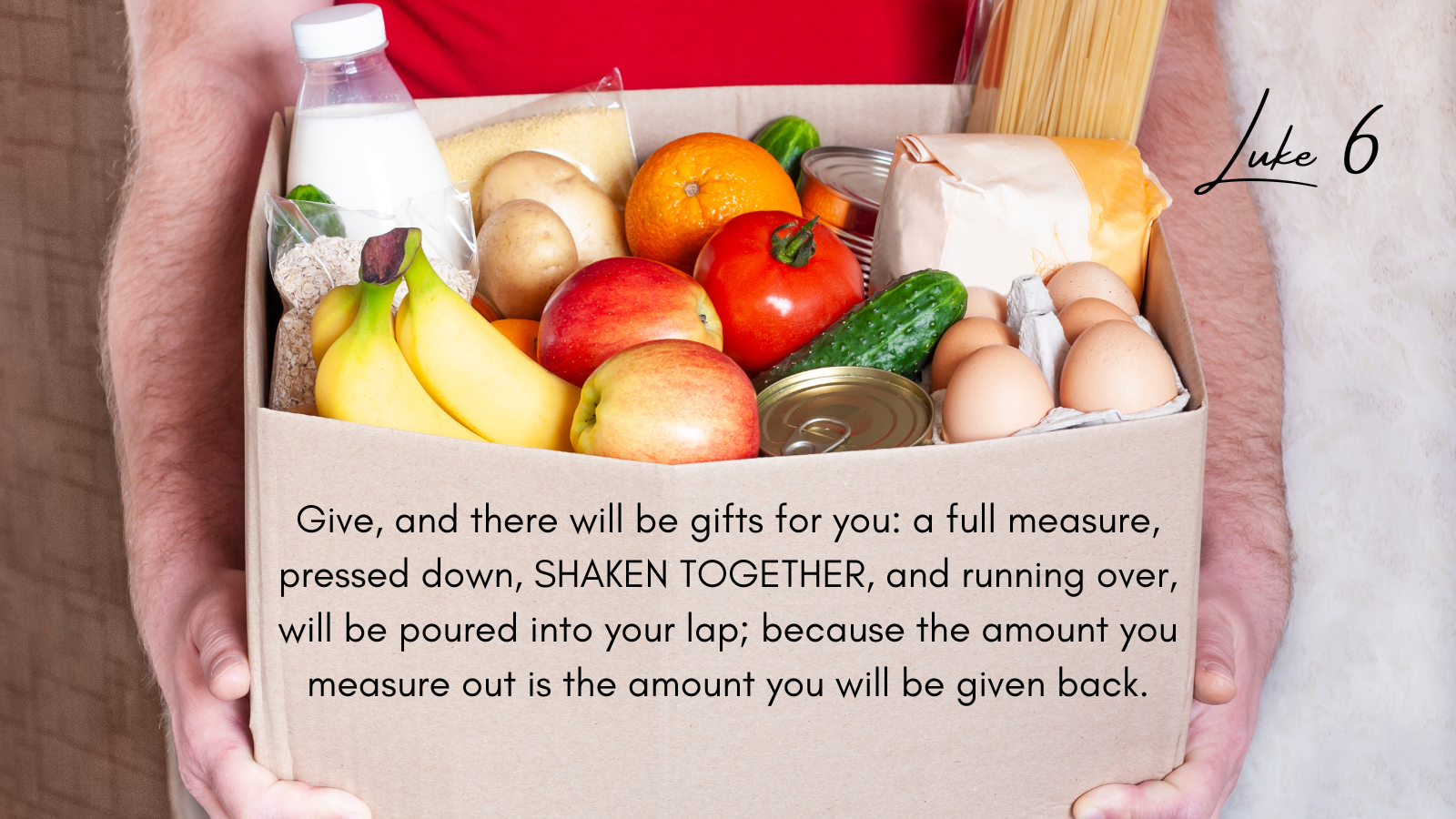
GIVE

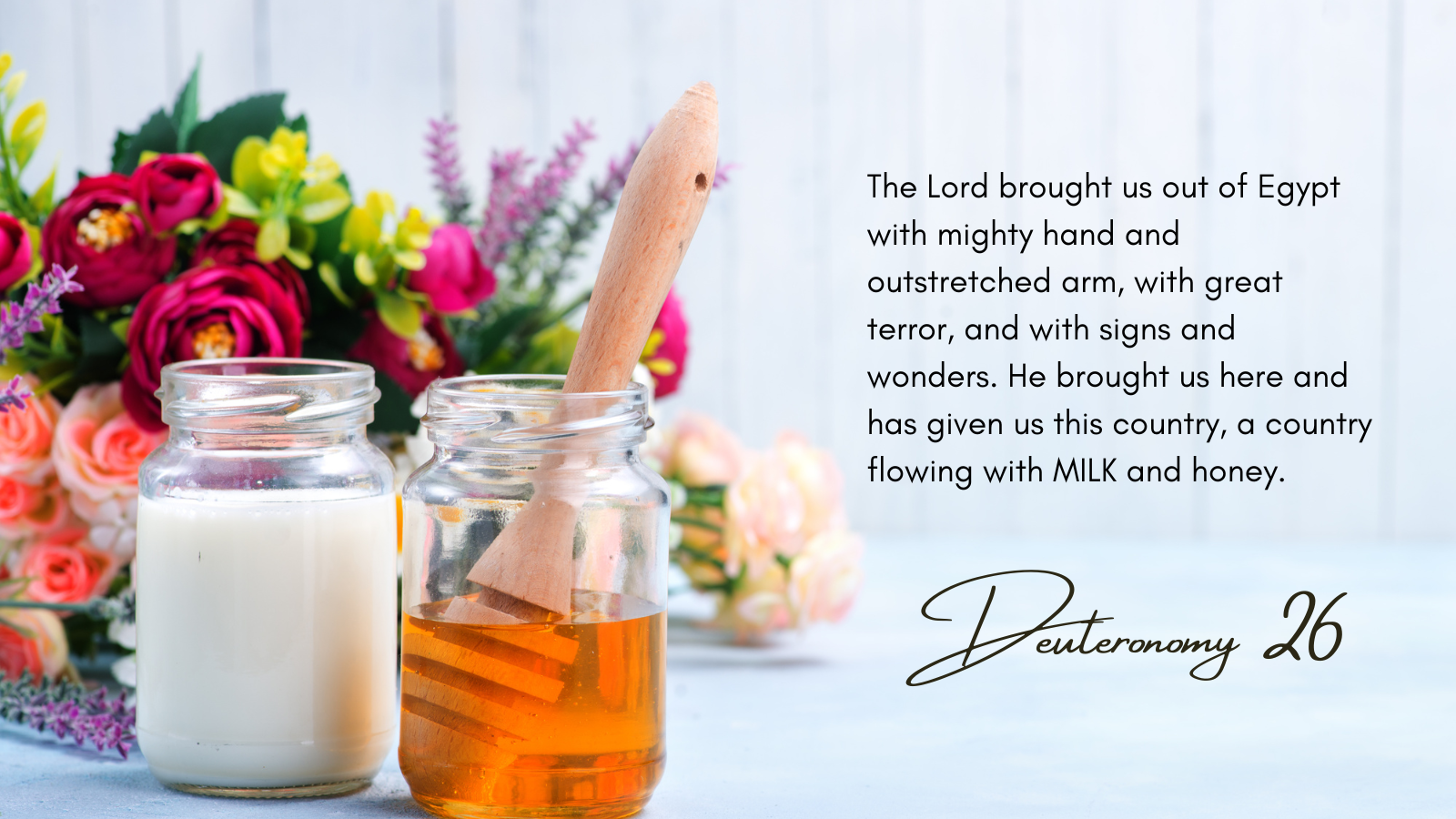
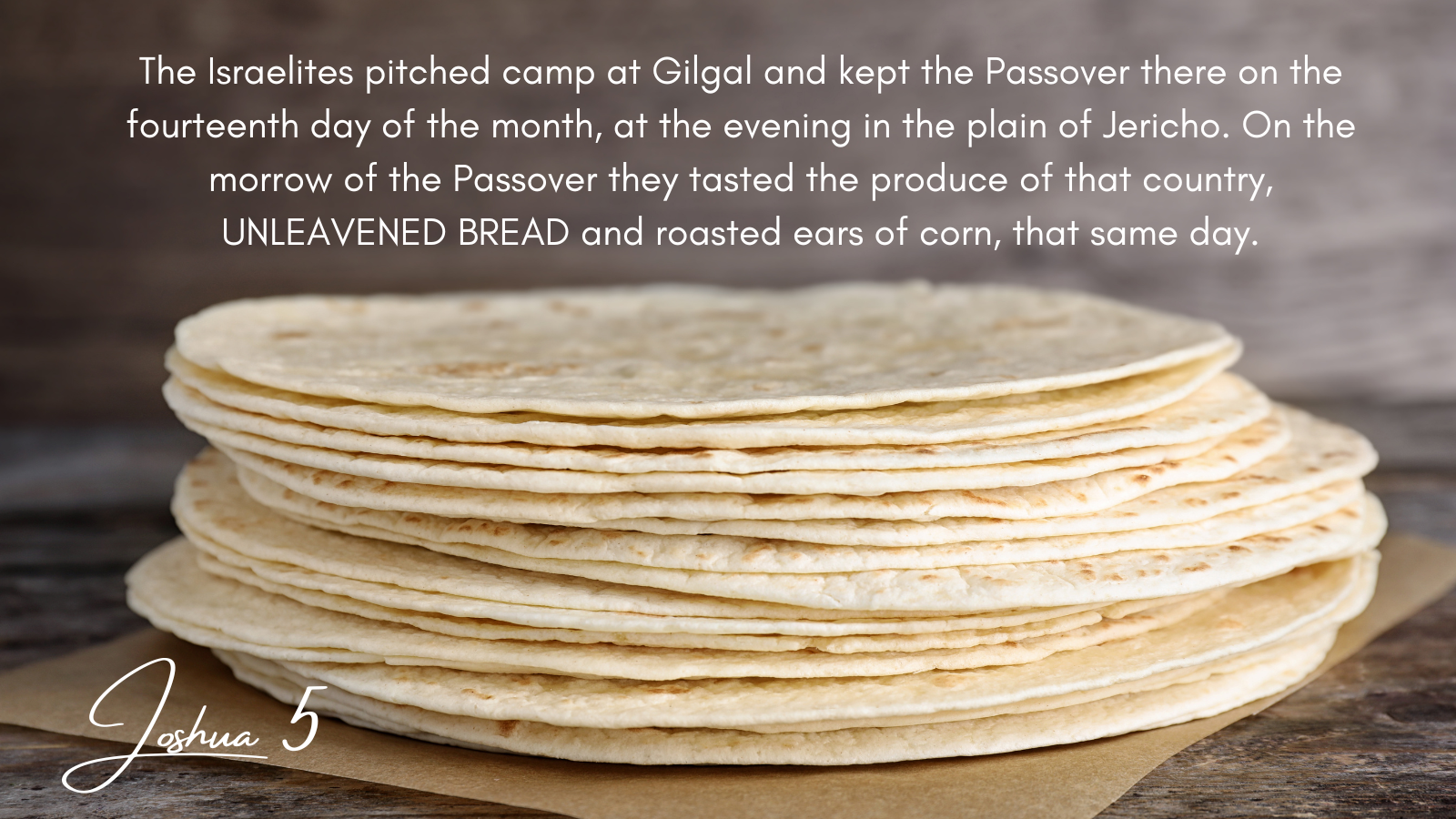
GIVE us today, our daily bread.

The Liturgy of the Word in Lent takes us through some of the major themes of our salvation history. Many of the readings can be heard as an invitation to conversion of heart. The Our Father can be read as a guide to this conversion. It’s familiar petitions chart for us a path of simple holiness.

I am always struck that this prayer contains within it a petition for our physical needs: bread. We are used to reading this spiritually, but I imagine the first hearers of Matthew’s Gospel will have heard this very much as physical. Having enough bread to eat was a daily concern for many. Wheat and barley crops were some of the most important crops in the agricultural economy of Jesus’ day. There is a deeper meaning too in this petition in that Jesus is teaching us to ask the Father for all our needs.

With the rise of food poverty in our country, there are many families who cannot go to bed at night with an assurance that there will be enough food for the next day. Our Lenten Appeals meet a need that is increasing. When we pray for the coming of the kingdom in the Our Father it’s precisely these situations which come to my mind. When we pray ‘thy kingdom come’ we commit to working for that change.

How is God calling you this Lent to provide daily bread for others?

(Matthew 6:7-15, Tuesday, 1st Week of Lent)

Lent Alphabet (F)

FASTING

The people of Nineveh believed in God: they proclaimed a FAST and put on sack cloth, from the greatest to the least.

So many thoughts surface for me when I come to explore the concept of food and fasting. I am conscious of friends who have struggled with eating disorders, I am troubled by the rise of foodbank use in the UK and throughout the world there are communities facing severe food shortages due to long term conflict, war and drought. So how do we hear the language of fasting?

In all the major Faith traditions of the world fasting plays a significant part. In the story of Jonah fasting is used as communal activity to bring about a change of heart. It’s an interesting detail that even the animals join in with the fast. The story shows fasting as an effective tool for change.

In the monastic tradition an element of fasting is built into daily life. It’s not so much the quantity of food that is restricted, it’s more that meal times are set and ordinarily you can’t help yourself to what you fancy when you think you need it. For St Benedict the middle way is the key to food provision and consumption. He wants his monks to eat neither too much not too little.

Lent then can be a time for finding that middle way in our relationship with food. Over the years I have come to realise that time spent eating mindfully and really appreciating the meal in front of me is as important as eating less. However you approach it, fasting is a tool for changing your heart. It’s about small changes that will enable you to prepare and celebrate Easter with joy.

Is there a small change that you could make to help you prepare for Easter with joy?

(Jonah 3:1-10, Wednesday, First Week of Lent)

Lent Alphabet (E)

EMPTIED

Make your own the mind of Christ Jesus:
Who, being in the form of God,
did not count equality with God something to be grasped.
But he EMPTIED himself, taking the form of a slave,
becoming as human beings are;
and being in every way like a human being,
he was humbler yet,
even to accepting death, death on a cross.

This ancient hymn in the Letter to the Philippians is a touchstone text of our faith. The hymn is framed by the invitation to me to make my own the mind of Christ. Whichever way I approach this text it’s the word ’emptied’ which always stands out for me. Christ here, freely and lovingly, empties himself of everything except the doing of his Father’s will.

I can place my Benedictine vows of Stability, Obedience and Conversion of Life solidly within this framework. Each requires that I empty myself in order to make space for God. In the vow of Stability I make space for God by committing to this community, in this place. In the vow of Obedience I try to lay aside my own will to make space for God’s will as mediated through the Rule, the Scripture, my superior and my sisters. In the vow of Conversion of life I make space for God by committing to inner growth, repentance and change.

When I hear this text I am reminded of Good Friday in our monastic chapel. The chapel is emptied of its usual furnishings. There’s a hollow sound in the acoustic and a stark reminder that the large wooden cross, made from trees from our garden, is now our sole focus.

How is Christ calling you this Lent to empty yourself and to make space for Him?

(Philippians 2:6-11, Palm Sunday)

Lent Alphabet (D)

DESERT

The Lord will always guide you, giving you relief in DESERT places. He will give strength to your bones and you shall be like a watered garden, like a spring of water whose waters never run dry.

Lent invites us into the desert and the Exodus experience of the Israelites.

I hear in Isaiah’s words the motif of the covenantal bond between God and Israel. While the demands are high and far reaching for Israel, God promises to sustain them.

Isaiah’s words were originally for a people in Exile. He holds out the hope of their triumphant return to their own land. This will need a change in political fortunes and also a change in their hearts and minds. If they can make this change they are promised strength in their bones and relief from what has been the ‘desert’ of their lives in Exile. The promise to Israel that they will be like a spring that never runs dry is such a helpful image for Lent. Lent is as much about our refreshment as our own desert experiences.

How do you hear God’s promise today?

(Isaiah 58:9-14, Saturday after Ash Wednesday)

First Sunday in Lent (A)

Genesis 2:7-9, 3:-17
Matthew 4:1-11

For the first hearers of Matthew’s Gospel the scene of Jesus in the desert would have struck a familiar chord. In the preceding chapters they heard of the miraculous birth of Jesus, an attempt to kill him, the need to flee to Egypt and his passing through the waters of the River Jordan. These events all find their parallel in the story of Moses. Matthew casts Jesus as the New Moses and this time spent in the desert parallels the 40 years that the people of Israel spent in the Sinai desert.

Despondency and grumbling almost break the will of the people of Israel. Moses continues steadfast. His heart is set on the Promised Land.

Jesus too models steadfastness for us. The devil makes three attempts at weakening his resolve. Jesus wields the sword of Scripture and remains unmoved.

We are perhaps out of the habit ourselves of turning to Scripture in the face of difficulty or temptation. Our ancestors in the faith, the Desert Fathers and the Desert Mothers, might be of some help to us with this. The memorising and repeating of Scripture was the heartbeat of their strange and counter cultural existence. These desert dwellers were all seeking ‘purity of heart’. At its simplest purity of heart is a life so attuned to God that you ‘want what God wants’. Scripture was the tool that cultivated the soil of their hearts. Repetition and meditation on short pieces of text changed and expanded the inner landscape of their hearts. The goal of the whole desert tradition was tenderness and compassion.

How is God calling you to cultivate tenderness and compassion this Lent?

Lent Alphabet (C)

COMPASSION

Now, now- it is the Lord who speaks- come back to me with all your heart, fasting, weeping, mourning. Let your hearts be broken, not your garments torn, turn to the Lord your God again for he is all tenderness and COMPASSION, slow to anger, rich in graciousness and ready to relent.

Each of the readings in the Liturgy of the Word for Ash Wednesday speak to me of a call to conversion and wholeness. They do this in slightly different ways. The Prophet Joel’s words are a rallying cry for a community in crisis. It is time for the community to turn back to the Lord. Their turning back is possible and desirable because God’s very being is compassion.

In Jewish thinking compassion is one of the highest virtues and marks of a faithful Jew. The word compassion (rahamanut) shares its root with the word for womb (rehem). The faithful keeping of Torah is a means by which the heart and soul are shaped in tenderness and compassion. The Torah binds in love, as a mother is bound to her child in the womb.

Lent is an invitation for us to turn our hearts and minds back to God. It’s an invitation to compassion for others and for ourselves.

How can you nurture compassion this Lent?

(Joel 2:12-18, Ash Wednesday)

Lent Alphabet (B)

BELOVED
And from the cloud there came a voice which said:
‘This is my Son, the Beloved; he enjoys my favour. Listen to him.’

The Lent Lectionary pairs Matthew’s account of the Transfiguration with the story of Abraham being promised God’s blessing.

When Abraham is asked to look at the night sky and to try and count the stars, he is at a threshold in his life. He is following a call where the only certainty he has is that God will be faithful. When Jesus climbs the mountain with Peter, James and John he too relies on the knowledge that in whatever lies ahead God’s faithfulness will uphold him. A relationship of love frames both stories.

When God speaks to Abraham there is a tenderness in what is promised;
‘I will bless you and make your name so famous that it will be used as a blessing.’

There is a similar tenderness in the Father’s voice from the cloud: ‘This is my Son, the Beloved; he enjoys my favour. Listen to him.’. These words are full of affirmation. Some years ago I read an article by Jesuit, Pat Davis, on the Psychology of Obedience. He made this comment:
It is very interesting that when God the Father speaks of Jesus it is always affirming. Now you would think that Jesus was the last person who needed affirmation, since he was fully human, fully mature, and yet each time we hear the Father’s voice speaking about his Son, it is very affirming, ‘This is my beloved Son in whom I am well pleased.’

So Lent then is an invitation to us all to move deeper into the mystery of God’s love and know that we too are beloved.

How would you most like God to show you that you are Beloved this Lent?

(Matthew 17:1-9, Second Sunday in Lent)

Lent Alphabet (A)

ALMSGIVING

But when you give alms, your left hand must not know what your right is doing; your ALMSGIVING must be secret, and your Father who sees all that is done in secret will reward you.

Lent begins in a potentially re-assuring place by offering us the three ancient spiritual tools of prayer, fasting and almsgiving. Our Biblical ancestors knew these tools well. Faithfulness to the Torah consisted in making prayer, fasting and almsgiving the roots from which all else could grow. It was a way of life.

It’s easy to look at these three tools as Lent begins and to use them as a measuring stick. But what if we saw Lent not as a time to feel guilty, but more as an opportunity for deepening what is already embedded in our lives?

Matthew’s handling of these traditional practices moves our attention to our hearts and our motivations. This is where the real work of Lent begins. That Matthew uses the word secret ‘six’ times in this passage speaks to me of the inner work that God calls me to do. The invitation to almsgiving turns my attention from my own needs to the needs of others. We naturally think in terms of giving money or food to those in need. In many ways time is as precious a commodity as food or money. You may be in a position to give all three.

How is God calling you to give alms this Lent?

(Matthew 6:1-6. 16-18, Ash Wednesday)

Candlemas

Luke 2:22-40

Throughout the liturgical year there are some hymns which seem to draw together all that I hold dear in biblical imagery and incarnational theology. Hail to the Lord who Comes is one of those hymns. This hymn helps me make an immediate connection between the Gospel scene of the presentation and my own life. Sometimes I need those connections to be very obvious.

Hail to the Lord who comes,
Comes to the temple gate,
Not with his angel hosts,
Nor in his kingly state;

But borne upon the throne
Of Mary’s gentle breast;
Thus to his father’s house
He comes, a humble guest.

The world’s true light draws near
All darkness to dispel,
The flame of faith is lit
And dies the power of hell.

Our bodies and our souls
Are temples now for him,
For we are born of grace –
God lights our souls within.

O Light of all the earth!
We light our lives with thee;
The chains of darkness gone
All sons of God are free. 

The hymn opens with a scene that is fairly easy to picture: Mary and Joseph, a little travel weary, come in faithfulness to the Temple, clutching their precious child. I imagine them standing on the Temple threshold, breathing in the sacred. They are filled with that awe that we have all experienced when we enter a sacred place. I imagine Joseph holding the offering tight and Mary holding Jesus tight. The gift in Joseph’s hands represents the love and longing of every faithful Jew to fulfill the Torah. The gift in Mary’s hand represents the love and longing of everyone who looked forward to the coming of the Saviour.

Can we see ourselves in the scene? Can we picture our hands open with all that we hold precious?

The world’s true light draws near
All darkness to dispel

The promise of this light draws Simeon and Anna near. They have walked towards this light all their lives. Each prayer, each small act of kindness, each fulfilling of the Torah has made space inside them to recognise and receive the light. And there they stand, bathed in that light. God’s promises have come full circle.

Our bodies and our souls
Are temples now for him,

These are the lines that touch me most from this hymn. They speak of wholeness and the goodness of every created thing. Read alongside the Gospel text they invite each one of us to be that Temple. We build the Temple out of the many fragments of our lives. It’s incarnational. It’s messy. But the promise is there that we are ‘born of grace’ and God ‘lights our souls within’. We were carried once, a precious bundle held tight. Our parents made an offering of all they held dear when they brought us to church for Baptism. God’s light has always been within us.

We light our lives with thee;
The chains of darkness gone
All sons of God are free. 

In these days of darkness and uncertainty we might look outside ourselves for light. In fact, the light we seek is already within us. We often glimpse it in others first. Today’s feast is an invitation to celebrate the light within each one of us.

How is God calling you to celebrate the light this Candlemas?

Mary, Mother of God

Numbers 6:22-27
Luke 2:16-21

In the Desert Tradition the men and women who fled to the physical margins of society developed a very particular relationship with Scripture and particularly with Biblical characters. They were judged by the Master to have understood the Scriptures in so far as they embodied the virtues of the Biblical characters.

This teaching came to mind today as I listened to the Gospel. When I ask myself how can I embody Mary’s virtues, I am brought back to this verse:

As for Mary she treasured all of these things and pondered them in her heart.

In the regular rhythm of monastic life I am invited to treasure and to ponder many things. Silence provides the seed ground for this to happen. It’s always an invitation. I imagine Mary as someone who had always been closely attuned to the many ways in which God speaks. I imagine that the Psalms and Prophetic books had sunk into her bones. She knew what to treasure.

How is God calling you to treasure and to ponder as this new year begins? 

S