Advent Alphabet (G)

GLORY

In the Prologue of John’s Gospel we find the themes of Life, Light, Love and Glory poetically woven together. It’s hard to separate one from the other. As the Gospel unfolds John shows us that Christ’s glory is revealed through the ‘signs’ (miracles) he performs. Glory is as much about doing as it is about being.

We can follow the theme of glory through salvation history. It is there in an implicit form in Genesis in God’s creative acts and the refrain that God sees that is ‘good’ and ‘very good’. That we are made in God’s image means that we are created to bear and reflect that glory. In Advent our focus sharpens and we hear through the prophecies of Isaiah how God’s glory is revealed. God promises Judah a glorious return, with every mountain laid low and every valley exalted. The Israelites are caught up in the glory of God’s saving actions.

And the Word became flesh and lived among us, and we saw his GLORY, glory as of the only Son from the Father, full of grace and truth.

This is a touchstone text of our faith. However our path has been shaped, whichever spirituality has drawn and shaped us, we are invited to be open to God’s glory and live lives that reflect it.

Can you name people in your own life who reflect God’s glory?
Thank God for them.

(John 1:1-18, Christmas Day)
Advent Alphabet (E)

EMMANUEL
Isaiah’s words speak directly to the political situation of 736 BC.  In the face of the growing power of Babylon, Judah is tempted to make an alliance with Assyria. Isaiah warns against this and when King Ahaz requests a sign this is what he hears:

‘The Lord himself, therefore,
will give you a sign.
It is this: the maiden is with child
and will soon give birth to a son
whom she will call Emmanuel,
a name which means God-is-with-us.’

Isaiah’s message is very clear: trust in God and don’t be tempted to organise things yourself. From our vantage point the words are very comforting. In the turmoil of our daily lives we need to know that God is with us. The image of a pregnant maiden also tells Ahaz that there is a plan and the difficulties will pass. God’s plan will unfold in months and not years. This is a God who stays close to his people.

Where have you felt the closeness of God this Advent?

(Isaiah 7:10-14, Dec 20th)

Advent Alphabet (F)

FLOCK

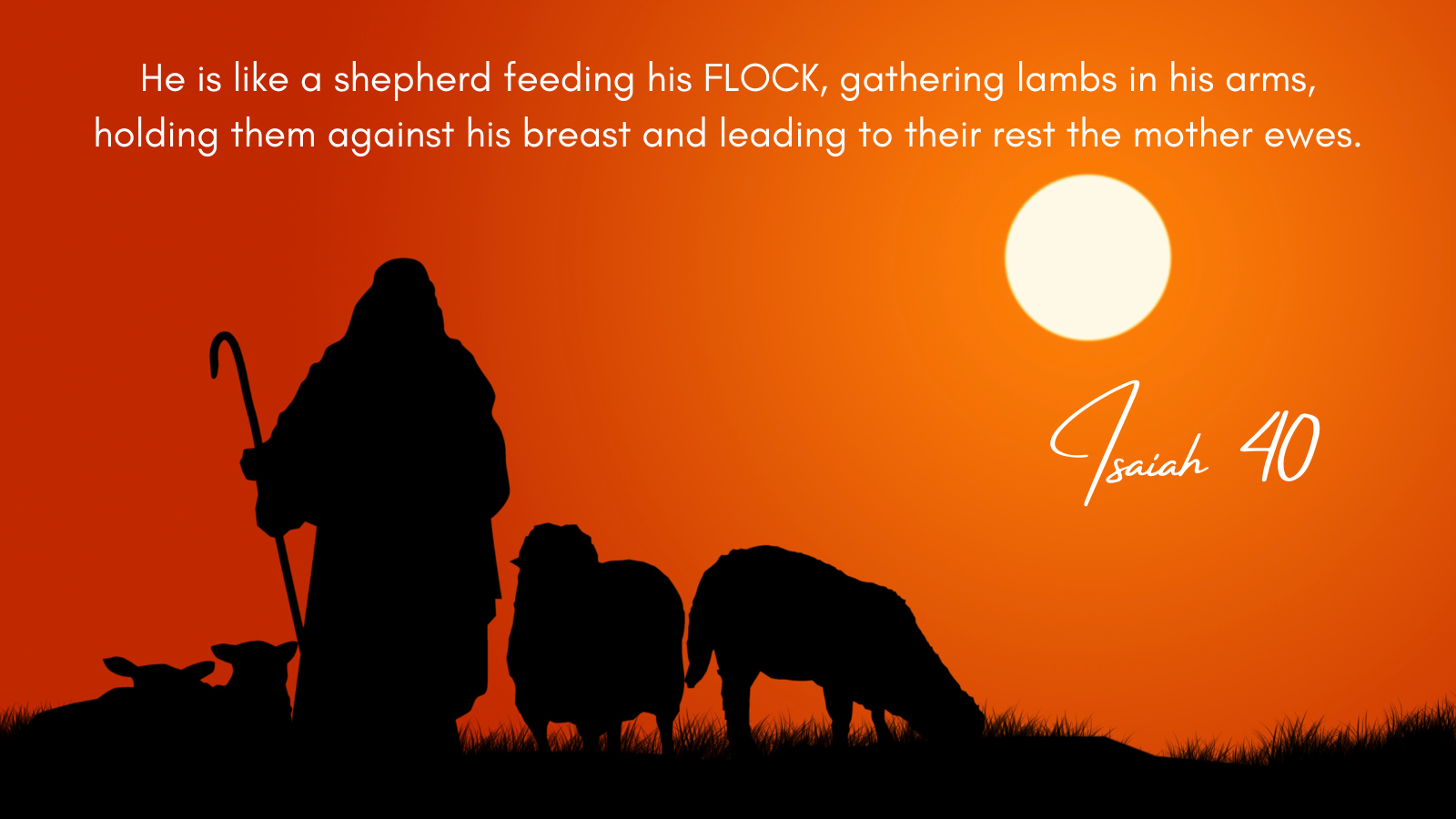
He is like a shepherd feeding his FLOCK, gathering lambs in his arms, holding them against his breast and leading to their rest the mother ewes.

Fluffy, clean sheep can be found on many of our Christmas cards. They look cute and comforting. For the people of Israel the image had different connotations; shepherding a flock was a matter of life and death. The shepherd’s livelihood depended on finding good pasture, guarding from predators and protecting the ewes and their lambs. The shepherds took on every danger themselves so that their flock would survive.

In the biblical imagination the shepherd has come to symbolise something of the strength and mercy of God. Judah has experienced a time of trial in Exile. Now they will experience the tenderness of God’s care. All past failing are forgotten and God will think only of the care and protection that is needed for their flourishing.

On a hillside in Bethlehem shepherds watched through the night. The well-being of their flock depended on their watchfulness. That night their watching turned to wonder as God’s glory was revealed.

Are there places in your own life where you are called to shepherd?

(Isaiah 40:1-11, Tuesday, Week Two)

Advent Alphabet (D)

DAVID

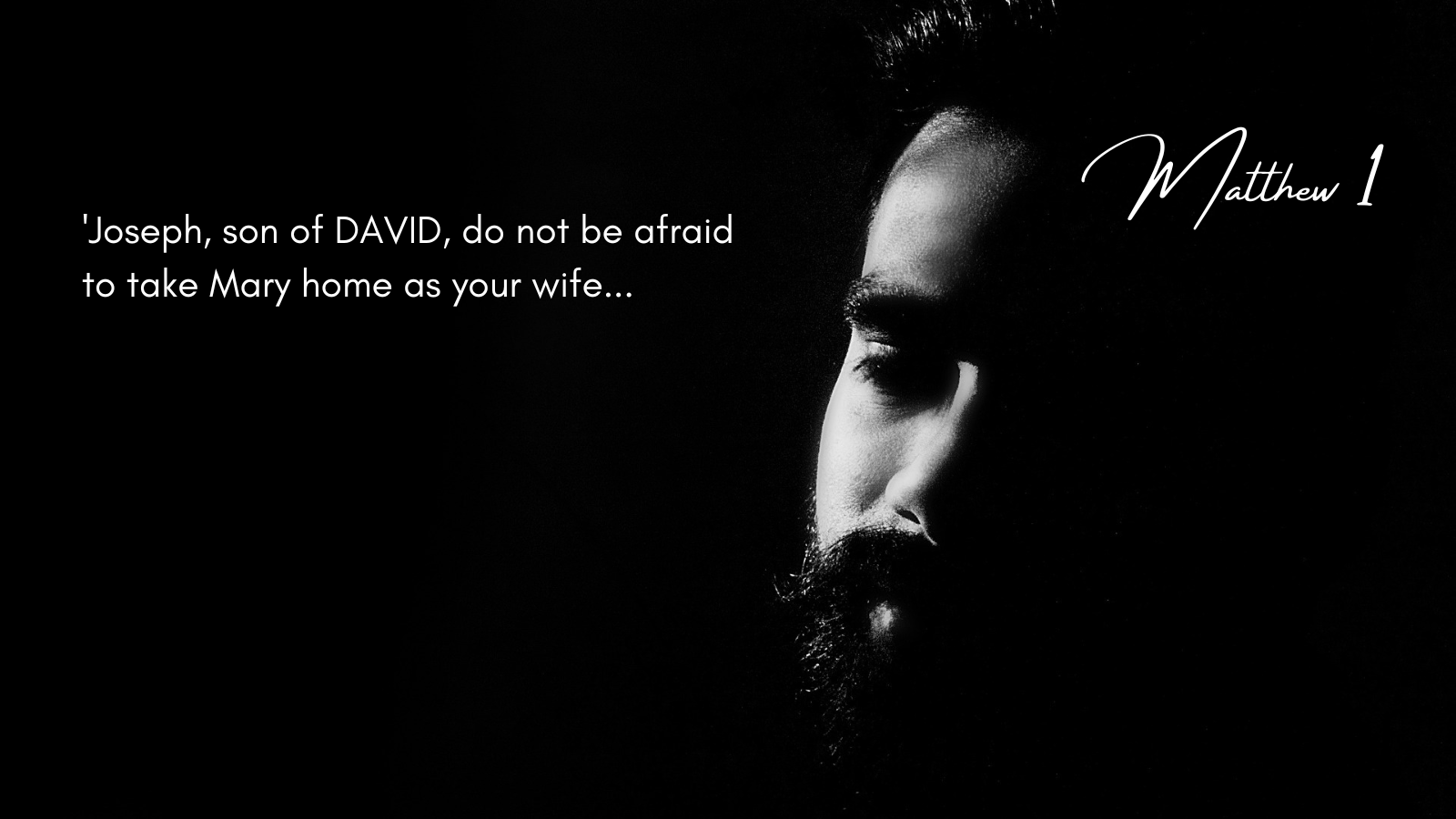
‘Joseph, son of DAVID, do not be afraid to take Mary home as your wife…’

As the biblical story of salvation unfolds we see Israel watching and waiting in times of darkness, faith-filled and courageous as the way head becomes clear, and jubilant as God’s promise unfolds. Each part of the journey has depended on Israel saying ‘yes’ and trusting in God’s promise. They have stumbled and almost fallen many times. The choosing of David, from the insignificant town of Bethlehem, marks a turning point in the story. David is the youngest and is called from the fields to be anointed king by Samuel.

To David will be given the promise of a dynasty that will stand firm and a throne that will be secure forever. The covenant, which up until this point was conditional, now becomes unconditional. The history of promise converges now in David. It is from David’s line that a Messiah will be born. Lineage matters a great deal in the story of our salvation.

That promise to David now takes shape through the faith of Joseph, son of David. His faithful living of Torah and his courage in trusting the angel’s word are essential to God’s plan. Right before his eyes God’s dynasty will be secure in the form of a tiny child. God has used every step of Joseph’s journey to bring his promise to completion.

Can you trace the path of God’s promise in your own life?

(Matthew 1:18-24, Dec 18th)

Advent Alphabet (C)

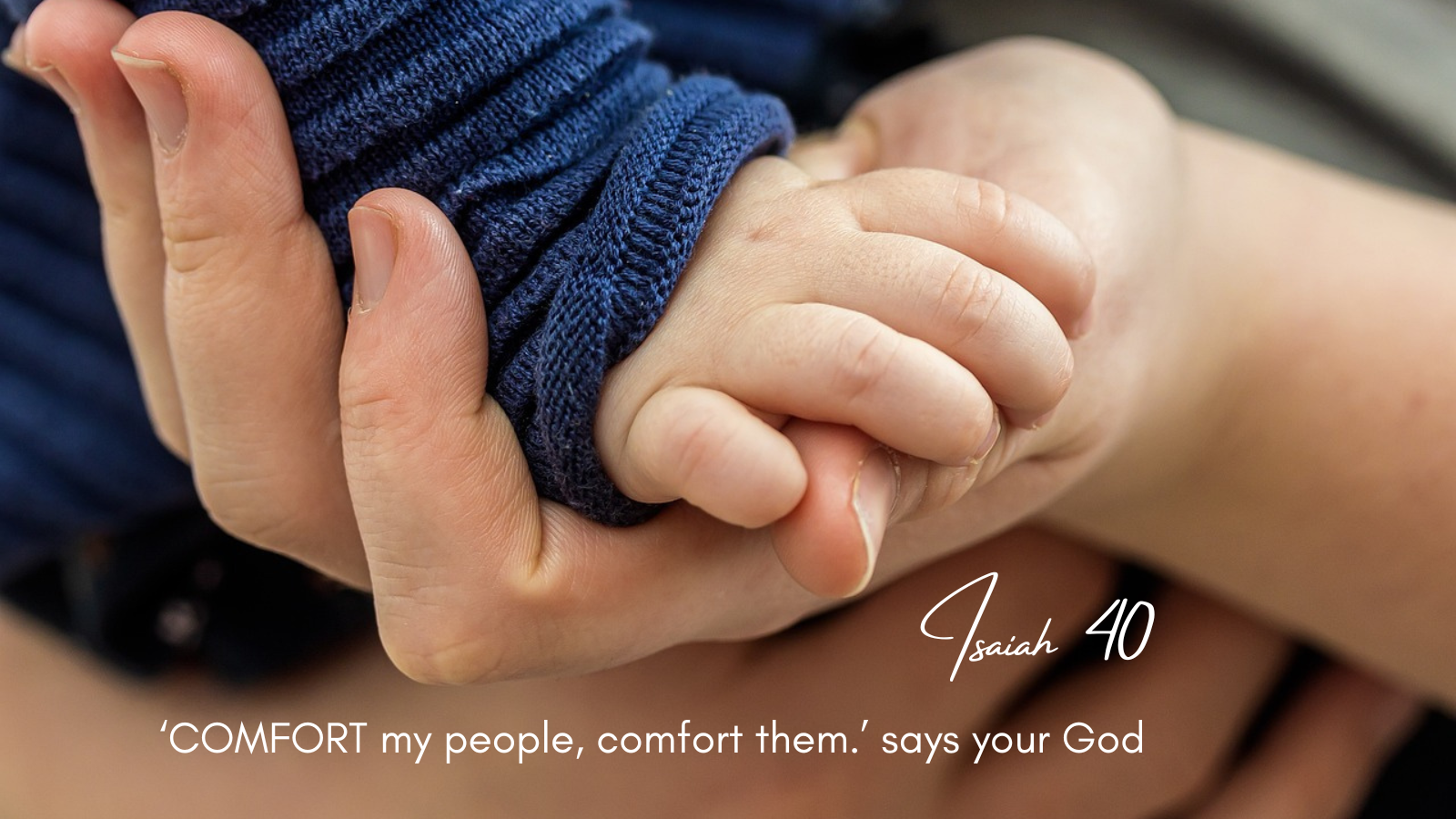
‘COMFORT my people, comfort them.’ says your God

The prophecies of the Books of Isaiah are integral to our prayer and worship in Advent. It’s almost impossible to hear the opening of Isaiah 40 without also hearing the plaintive tones of Handel’s Messiah. This is a God who is invested in our lives. This is a God who sees our distress and wants to bring comfort.

From exile in Babylon Judah has cried out in anguish. They have found no source of comfort:

 Zion stretches out her hands, with no one to comfort her. 
(Lamentations 1:17)

God now speaks and ends the silence and emptiness of Exile. Judah is now to enjoy possibilities beyond her imaginings. The comfort that God offers is much more than solace, it is the promise of a complete reversal of fortunes. All the suffering that Judah has endured in exile will now be turned to joy.

There’s an element in the process of bringing comfort that acknowledges, but doesn’t judge, the source of pain. This is how God is with Judah. This is how God is with us.

Where are you most need God’s comfort this Advent?

(Isiah 40:1-11, Tuesday, Advent, Week 2)

Advent Alphabet (B)

BLESSED

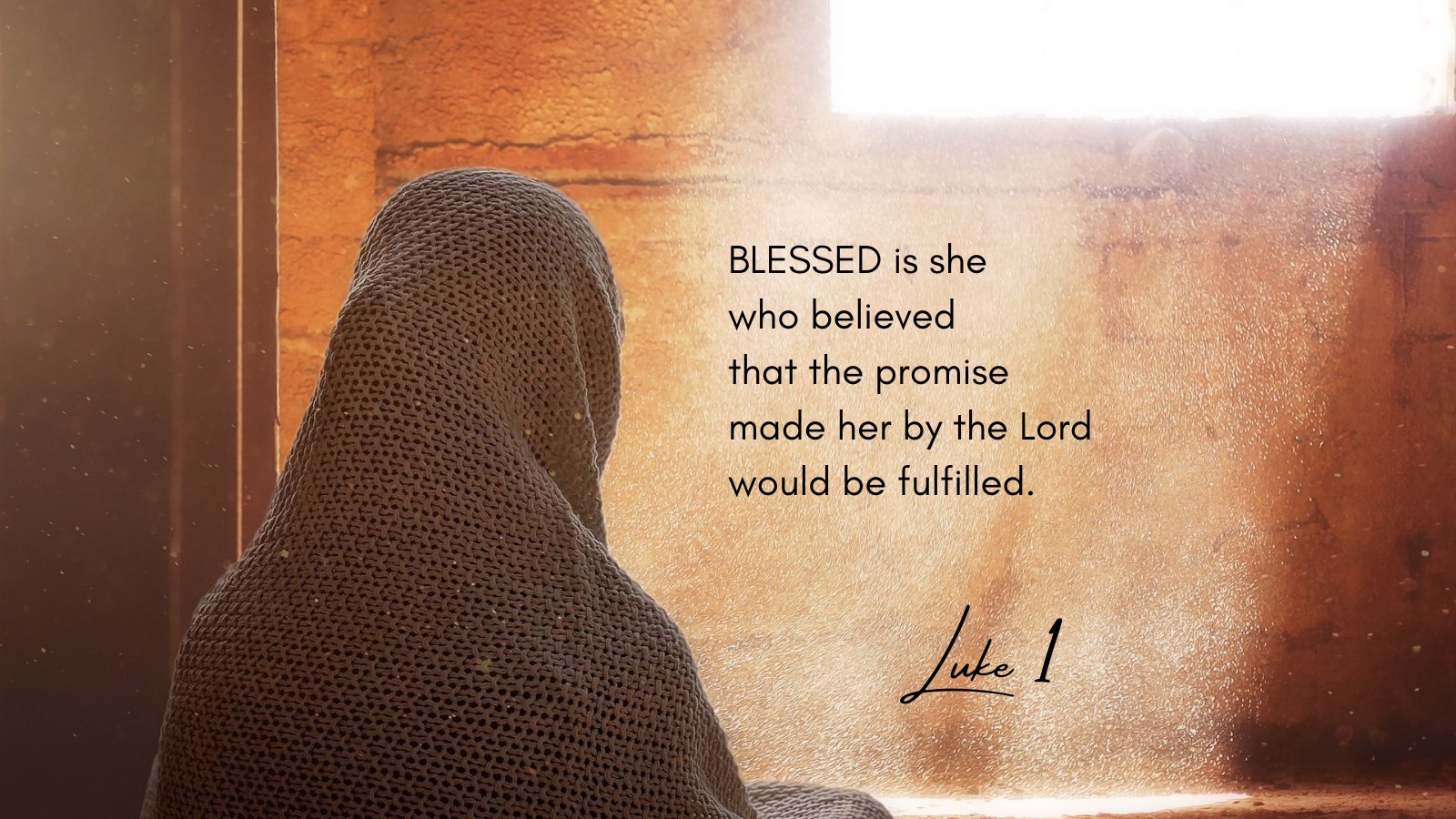
BLESSED is she who believed that the promise made her by the Lord would be fulfilled.

Over the course of Advent we’ll trace the story of our salvation with all its twists and turns. It’s a story of promise and blessing, of anguish and exile. Through eyes of the prophets and biblical characters we will learn what it means for God to bless and to bring that blessing to fulfilment.

From the opening chapters of Genesis, to the closing chapters of the Book of Revelation, we find the language of blessing. There are many ways to understand the Biblical view of blessing. It can be understood as ‘a dynamic concept, always forging ahead, the object of hope and searching’. (Brueggemann)

We see something of this dynamism in the scene which Luke paints for us of Mary going in haste to visit her cousin Elizabeth. Elizabeth recognises in Mary a woman who has been faithful to Torah all of her young life. She is a woman who has already walked in the way of the blessed. God’s promise to Mary opens up the path of blessing for all ages to come.

Which blessing do you hope for this Advent?

(Dec 21st Luke 1:39-45)

Advent Alphabet (A)

As Advent begins the message is loud and clear: stay awake. Advent calls us to be awake and attentive to the many ways in which the Word made Flesh is already present in our lives. It calls us too to hope that all that weighs heavy in our personal lives, and the world, will be touched by Christ’s birth. As we look back to the birth of Christ in Bethlehem the Church also invites us to look forward to Christ’s Second Coming.

Luke paints for us a rather frightening scene:

‘There will be signs in sun and moon and stars; on earth distress of nations in agony, bewildered by the clamour of the ocean and its waves; men dying of fear as they await what menaces the world, for the powers of heaven will be shaken.’

On simple level I hear in the text an invitation to be open and ready to all the ways in which God will be revealed to me this Advent. I can neither control nor predict those ways, but I know for certain that they will happen. Some of the ways in which God will be revealed will be gentle, others won’t. My Advent always starts well, but it doesn’t take long before many things compete for my attention. My hope is that I will stay awake.

How is God calling you to stay awake this Advent?

(Advent Sunday 1(C), Luke 21:25-28, 34-36)

Mary Magdalene

John 20:1-2,11-18

As few years ago I read and article about Pope Francis where the writer talked about the importance of understanding his style of leadership, way of speaking and particular vocabulary. What stands out for me when I think of Pope Francis is his stress on the culture of encounter. Pope Francis wants us to meet people where they are, not where we would like them to be.

It’s possible to see the whole of our salvation history through the prism of encounter. In our biblical imaginations we hold the images of Adam and Eve who are afraid of that encounter and hide themselves, Abraham who encounters God as he looks at the stars of the night, Sarah who listens at the opening of the tent and hears God’s promise for her, and so many more. Each encounter involves a person taking one step nearer to the God who holds the promise of all Life.

Mary Magdalene too must take that one step closer to Jesus. Making her way to the tomb in darkness, she’s drawn by the power of every moment of encounter that she has ever had with Jesus. It might well have been as dawn was breaking that Jesus meets her. He takes the initiative. Then she must respond too.

I am always struck by the very human nature of this encounter. Jesus says her name and in that moment Mary is returned to herself. There are no angels or flashes of light, just one person recognising another. Raymond Brown sees in this moment an echo of the Good Shepherd in John 10:

‘She is one of those of whom Jesus said “I know my sheep and mine know me.” ‘

There are many ways for us to come to faith. Mary Magdalene shows us the way of encounter.

Imagine Jesus calling you by name. How do you respond?

Feast of St Benedict

Proverbs 2:1-9
Matthew 19:27-29

My son, if you take my words to heart,  
if you set store by my commandments,
tuning your ear to wisdom,  
and applying your heart to truth:
yes, if your plea is for clear perception,  
if you cry out for discernment,
if you look for it as if it were silver,  
and search for it as for buried treasure,
you will then understand what the fear of the Lord is,  
and discover the knowledge of God.

This text from the Wisdom literature of Proverbs resonates immediately for followers of St Benedict. St Benedict begins his Rule is this way:

‘Listen carefully my son, to the master’s instructions and attend to them with the ear of your heart. This is advice from a father who loves you; welcome it, and faithfully put it into practice.’

There is a groundedness and loving measure in each text. I can’t hear one with out the other. This is one of the gifts of the monastic path that your ear, and ideally your heart too, become more finely tuned.

It’s from this place of attentive listening and desire to seek God that I hear Peter’s heartfelt question: ‘What about us? We have left everything and followed you. What are we to have, then?’ Following Jesus, following St Benedict or following any leader is a risky enterprise. I am sure that there comes a point in every monastic’s life when they could very easily voice Peter’s question. Jesus’ response to Peter tells us something of the dynamic at work here: we are to receive ‘a hundred fold’. Following Jesus involves a heart that is both open to giving up AND receiving. In many ways the giving up looks more straight forward. Learning to receive what God offers becomes the lifetime’s work of the monastic and anyone who wants to follow Christ.

How is God calling you to give and receive today?

Thirteenth Sunday in Ordinary Time

Mark 5:21-43

This Sunday the lectionary offers us two stories which have been woven together: the woman with the haemorrhage and Jairus’ daughter. Both are stories of risk. Both are stories of faith. Both tell us something about how Jesus comes to save us.

Last week we saw Jesus ‘save’ his disciples from a storm at sea. This week the needs are physical too. Mark uses these two stories as vehicles for important truths for his hearers. When Mark tells his stories some commentators see a literary form which was popular in Greco-Roman literary circles, the chreia, a brief anecdote about the words or deeds of a particular person. Mark’s use of this form is unusual as these stories were usually about men. If women were the subjects, the virtues portrayed were often stereotypically feminine.

Mark does something very different with this literary form. The story of the woman with the haemorrhage begins in a place of risk: pushing through the crowd the woman takes the initiative and physically reaches out to touch Jesus. For years she has sought the conventional medical wisdom of the day, but now she relies on her own intuition and wisdom. I love her deep conviction:

‘If I can touch even his clothes,’ she had told herself ‘I shall be well again.’

In that moment she risks everything. Her willingness to risk draws her into a life-changing encounter with Jesus. I often wonder if time stood still for her in that moment. Was she oblivious to the crowds, seeing and hearing only Jesus?

‘My daughter, he said ‘your faith has restored you to health; go in peace and be free from your complaint.’

Here Jesus ministers to the woman in body, mind and spirit. Here is a foretaste of the wholeness that the Kingdom offers. The woman’s bold and simple faith has drawn her to Christ and now she’ll live a life grounded in Christ’s promise to heal and save.

In this coming week how can you seek our Christ who heals and saves?