Isaiah 41:13-20
Matthew 11:11-15
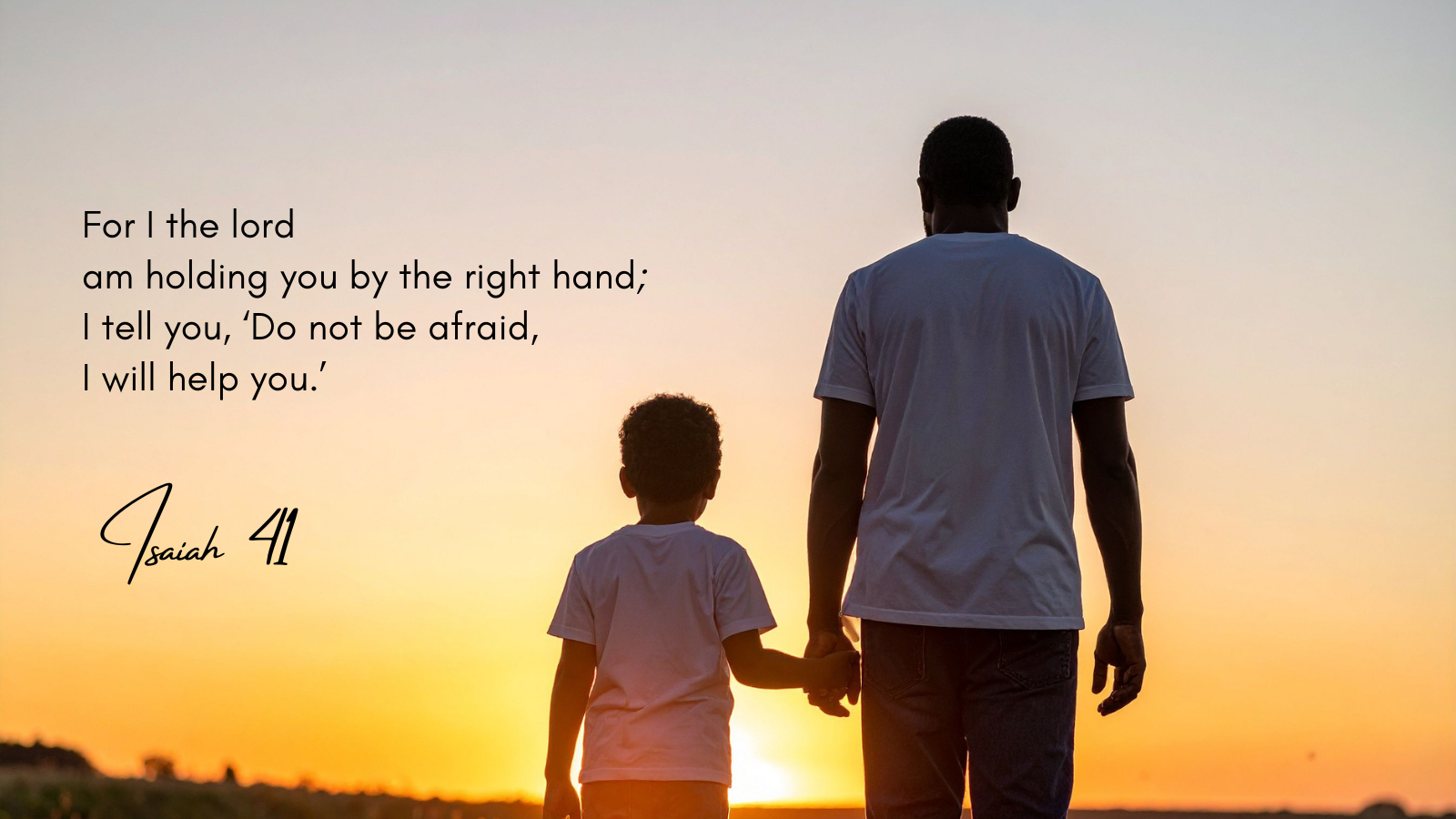
‘For I the Lord, your God,
am holding you by the right hand;
I tell you, ‘Do not be afraid,
I will help you.’
From the very beginning of the history of salvation we see the part that fear can play in how we relate to God and each other. The primitive ‘fight or flight’ response is hard-wired in our nervous system. Fear is natural and our ability to overcome it will vary according to many more factors than we realise.
Israel’s experience of exile meant that they lived with a heightened sense of alert. If you have witnessed the devastation of your homeland and the destruction of the one building that guaranteed God’s presence, the Temple, then fear is the natural response to anything that might threaten your fragile sense of self and community. This fragile sense of self is voiced by Isaiah as he refers to Jacob as ‘poor worm’ and Israel as ‘puny mite’. Isaiah uses more reversal imagery to assure the people that God can take their weakness and make them strong.
See, I turn you into a threshing sled,
new, with doubled teeth;
you shall thresh and crush the mountains,
and turn the hills to chaff.’
The newly empowered Israel will be able to make her way to freedom. And water, the thing that is most essential in the desert, will be provided in abundance. Not only that, but terrain that once yielded nothing will be planted with cedar, acacias, myrtle, olives, juniper, plane and cypress.
In a world that prioritises strength and makes fun of weakness it’s not always easy to acknowledge our weaknesses, let alone see how God could use them. When a situation seems hopeless it can be impossible to see how new life might come. In Advent we await Christ’s coming in weakness to meet us in our own weakness.
Are there situations in your own life where God is inviting you not to be afraid? When God tells you that he will hold you by your right hand, what is your response?