SECOND WEEEK OF ADVENT
TUESDAY
Isaiah 40:1-11
Matthew 18:12-14
Today Isaiah paints the scene of a triumphant homecoming for Judah, their time of exile ended. Isaiah uses the familiar biblical theme of reversal, and we are invited to picture a landscape where valleys, hills, ridges and mountains are transformed. It’s likely that the image of ‘a straight highway’ will have reminded the hearers of this prophecy of the triumphal journey of the Israelites through the Red Sea and of the entry into the Promised Land. The language of triumph continues as a messenger shouts the joyful news: Here is your God! This God shows all the solicitude of a shepherd:
He is like a shepherd feeding his flock, gathering the lambs in his arms, holding them against his breast and leading to their rest the mother ewes.
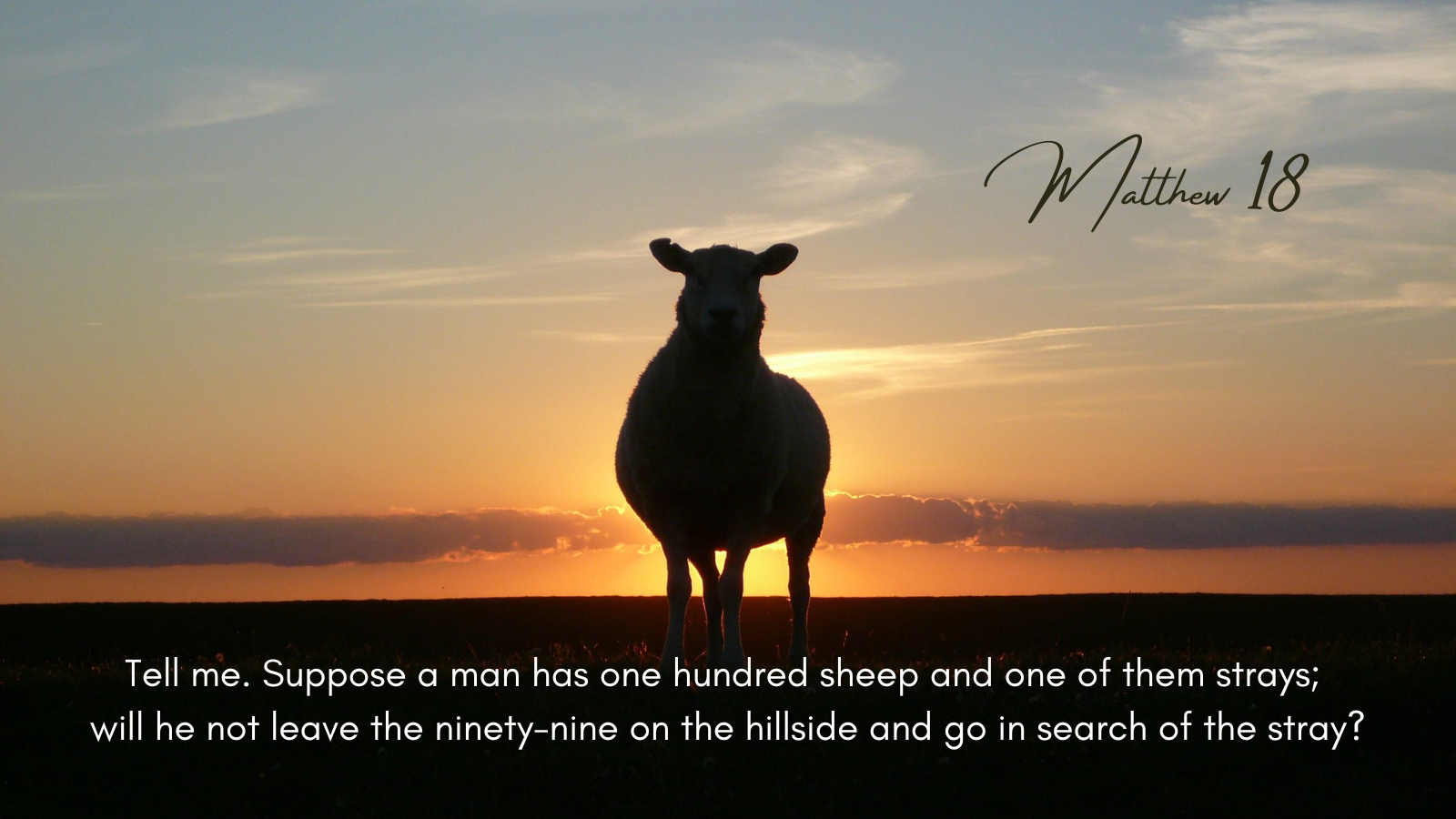
The link is made easily with our Gospel story from Matthew of the man who leaves his ninety-nine sheep in search of one that has strayed. Dom Henry Wansbrough comments that while Matthew’s story lacks some of the affection of Luke’s, what is significant is that this story is told in the middle of Ch 18, which is all about living together in community. Going in search of the lost is intrinsic to Christian community.
The Rule of St Benedict is only seventy-three chapters long. It fits easily in a pocket. Yet within these seventy-three chapters there is wisdom which has stood the test of time. The more familiar I become with the Rule, the more I notice the nuances, and most especially the humanity of the text.
Ch 27 of the Rule deals with ‘The Abbot’s Concern for the Excommunicated’. It is part of a series of chapters which are often referred to as St Benedict’s ‘Penal Code’. They largely don’t make for easy reading. Even if we take into account St Benedict’s historical context, we are still left with practices and some attitudes which we wouldn’t and couldn’t countenance today. There’s is, however, a thread which runs through each chapter: actions done by one member of the community affect the whole. What motivates St Benedict is the good of the whole community in its search for God.
‘…he ought to use every skill of a wise physician and send in senpectae, that is, mature and wise brothers, who, under the cloak of secrecy, may support the wavering brother.’
I am always struck by the humanity of the words quoted above from Ch 27. The abbot deputises ‘mature and wise brothers’ to seek out the wayward brother. The fact that this is to be done in secret speaks volumes. The last thing you would want to do is make public the struggles of another. I get the impression that these ‘senpectae’ would have seen it all before and be unshockable. It is noticeable too that St Benedict doesn’t suggest that the abbot himself seek out the brother. As a wise physician he knows when to call upon the particular skills of others in the community. The abbot is to act with ‘speed, discernment and diligence’. St Benedict knows that timing is everything when difficulties arise.
Is Christ calling you this Advent to be a wise physician and to reach out to someone who is struggling?